
Three systems. Zero drift.
DNS, DHCP, and IPAM drift apart because they are three databases pretending to agree. XonDDI collapses them into one record of truth with derived views. Drift is not detected and fixed. It cannot occur.
Not synchronised.
Derived.
Legacy stacks run three databases and a prayer of sync jobs. XonDDI stores one record; DNS answers, DHCP scopes, and IPAM views are projections of it. A record cannot disagree with itself. That is the entire trick, and it removes a whole category of outage.
What is DDI?
DDI unifies DNS, DHCP and IPAM into one management surface. Run as three separate systems they drift apart — DNS records point at reassigned addresses, DHCP scopes overlap allocations. XonDDI stores one record of truth; everything else is a projection of it.
- DNSSEC signing with platform-managed keys
- DHCPv6 prefix delegation native
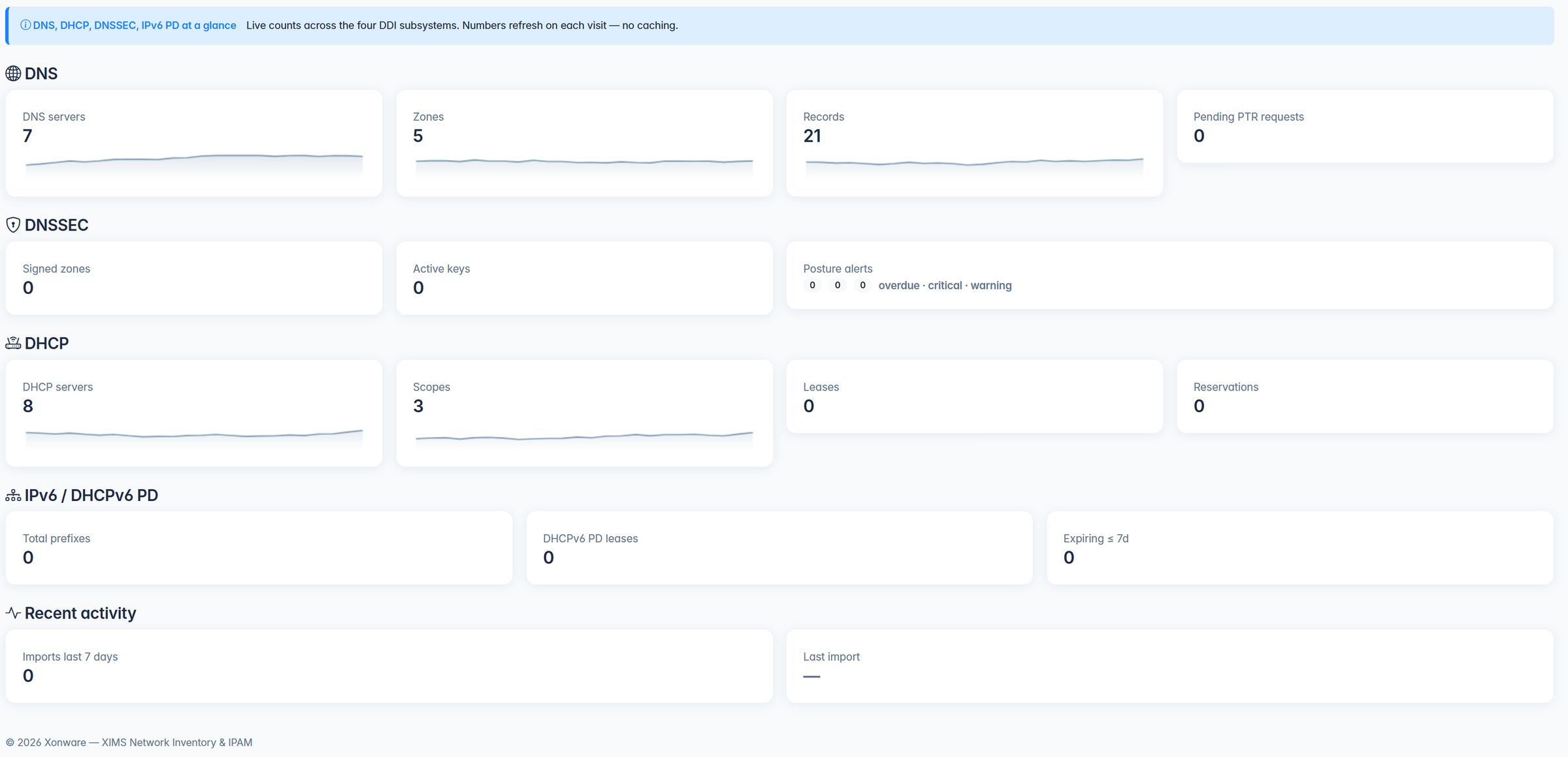
- Console shown live — demo data
Bring a zone file. Watch drift become impossible.
Book a technical walkthrough →